
MAAFA
“…tethered souls don’t know how to breathe deep and auction blocks do not lend to comfortability… there is something about suffering that makes some men mad and makes others money…”
- Sunni Patterson, Author & Poet
Maafa
will take place
saturday, July 4th, 2026
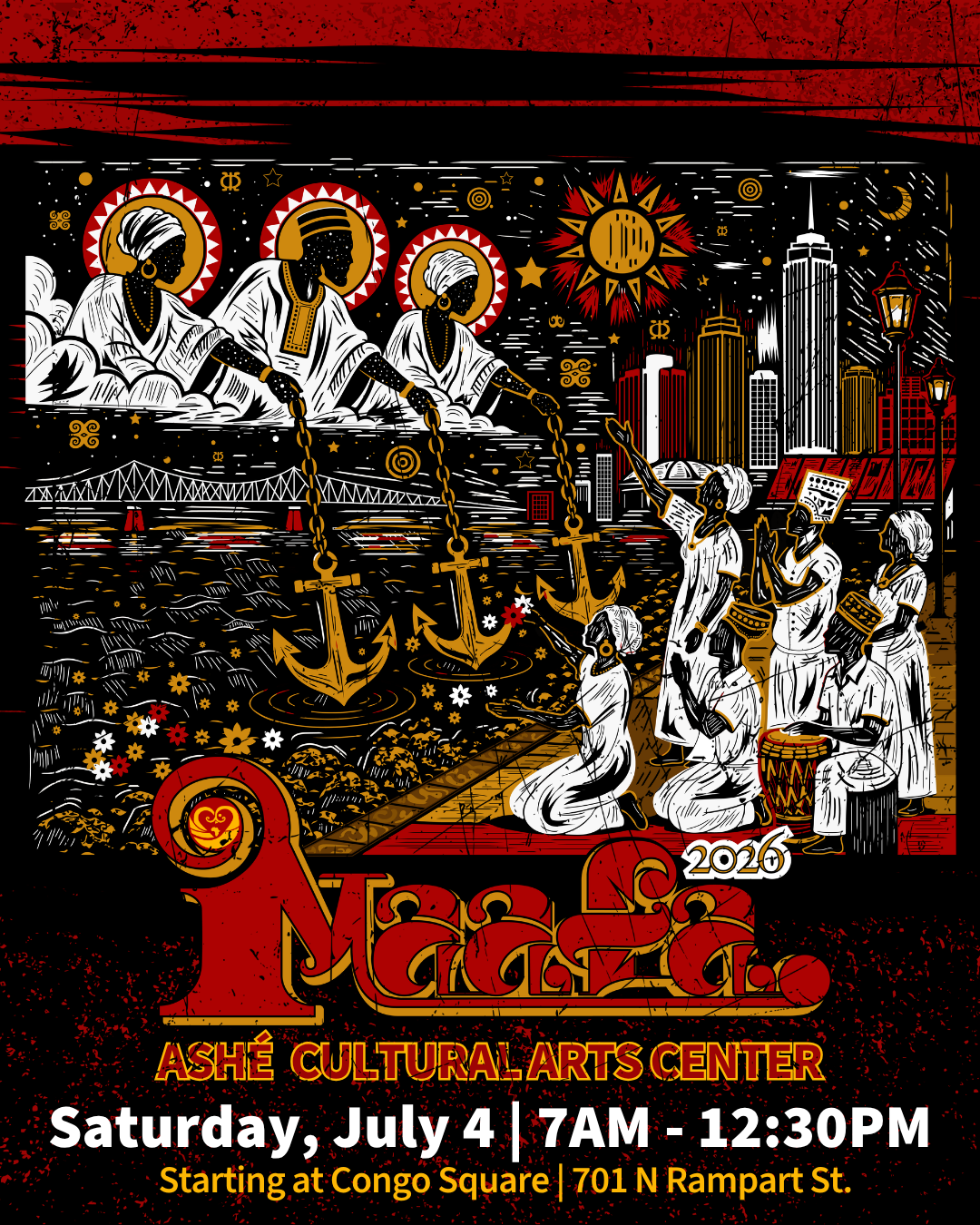
Theme: Anchored by the ancestors
Holding sacred ground through memory & resistance
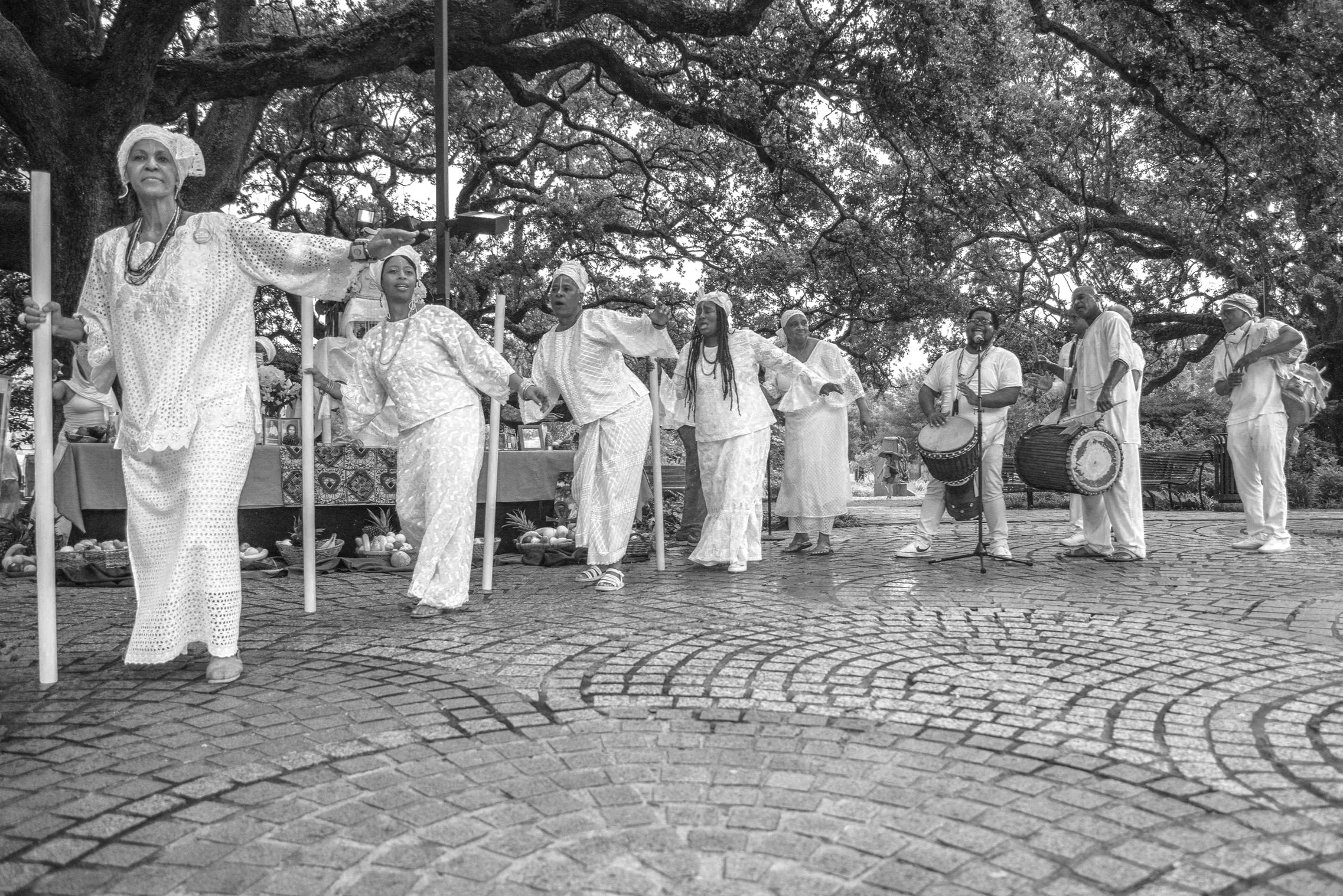
The annual New Orleans MAAFA Commemoration is a community remembrance event, a moment to reckon with the horrors of the Transatlantic and Domestic Slave Trades, and a release from the chains of its legacy. MAAFA is a Kiswahili word meaning “horrific tragedy” and refers to the period known as The Middle Passage. This year’s event presented by Ashé Cultural Arts Center is on Saturday, July 4, 2026 at 7:00am, beginning at Congo Square (701 N Rampart St.)
This year’s theme is Anchored by the Ancestors—a tribute to the timeless legacy of those whose strength, wisdom, and perseverance continue to guide our path. Across generations, our ancestors have carried the stories, traditions, and values that define our culture, leaving an indelible imprint on our collective journey. Their sacrifices became our foundation; their dreams became our inheritance. As we gather in their honor, we celebrate the enduring connection between past, present, and future, firmly rooted in the legacy of those who came before and empowered by the possibilities that lie ahead.
MAAFA identifies historically-significant locations of New Orleans’ own history as a major slave market, such as Esplanade Avenue and The Tomb of the Unknown Slave in Tremé. In closing, we say the names of those enslaved and free, victims of tragic events, senseless violence, as well as all those who were, so that we might be.
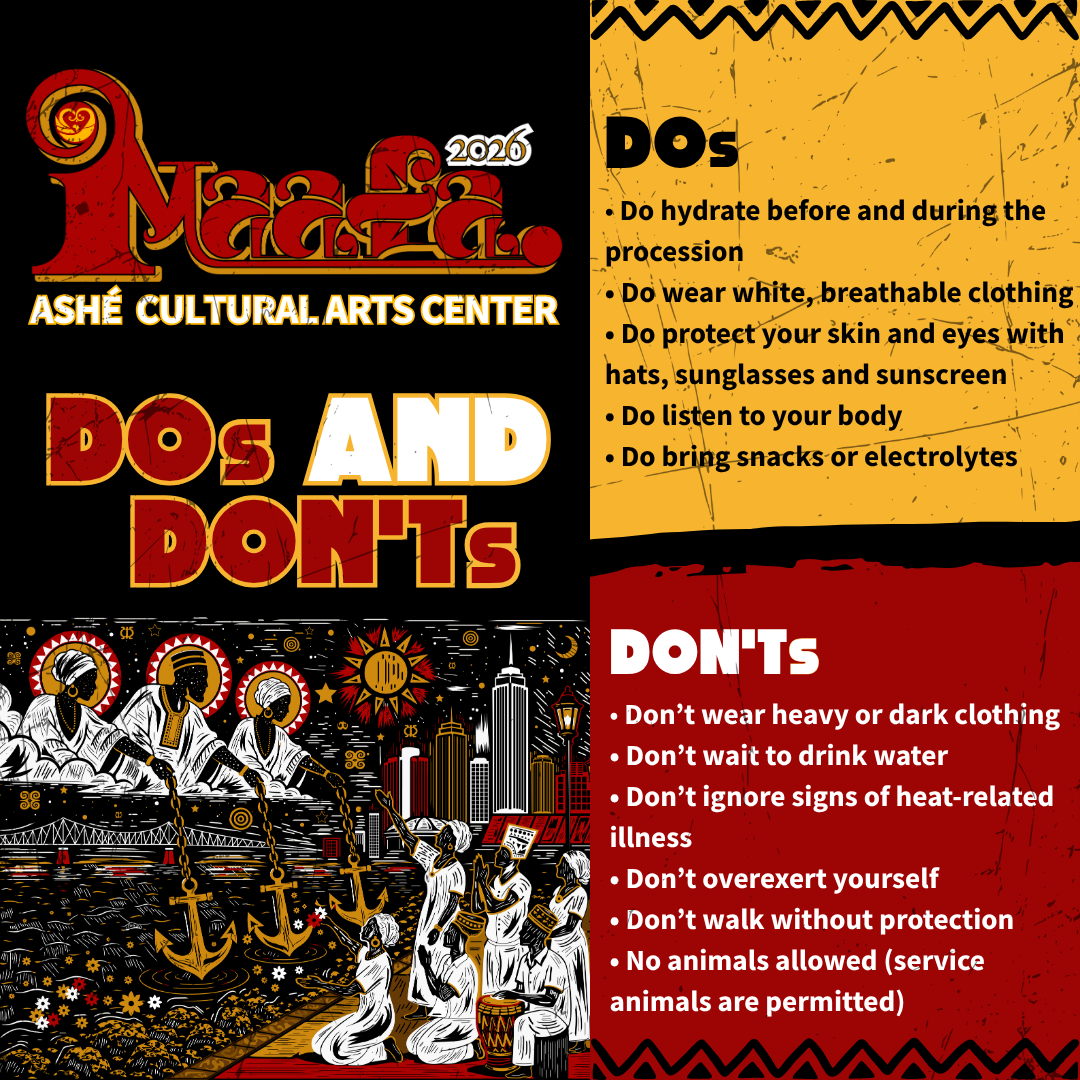
All white attire is preferred. The local community and visitors are invited to attend this commemoration event of healing, testimony, and celebration of our ancestors, existence, and survival.

MAAFA 2026 PROGRAM
WELCOMING SOUNDS
Led by Zohar Israel
DRUM CALL & ELDER’S PERMISSION TO BEGIN
Led by Jamilah Peters-Muhammad
KUMBUKA AFRICAN DRUM & DANCE COLLECTIVE
OPENING LIBATION
Kumbuku African Drum & Dance Collective
POEM
Sunni Patterson
LAND ACKNOWLEDGEMENT
Frederick “Wood” Delahoussaye
WELCOME
Asali DeVan Ecclesiastes
GROUNDING IN PLACE
Dr. Freddie Williams
PERFORMANCE
Mazi Patterson
CALL FOR HEALING
Practitioners of the Catholic Faith, NOI Faith, Voodoo Faith, Buddhist Faith, Baptist Faith, and IFA Faith.
INTRODUCTION OF GRAND GRIOT
Introduced by Asali DeVan Ecclesiastes
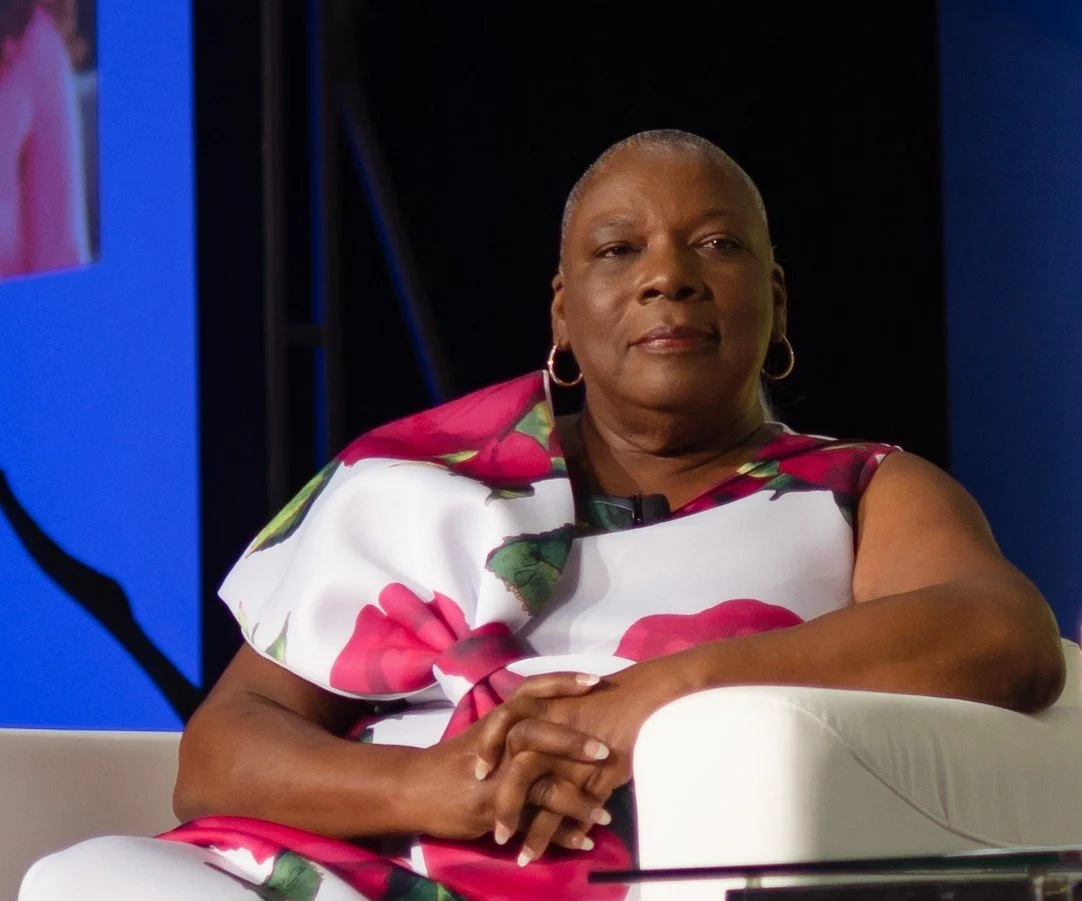
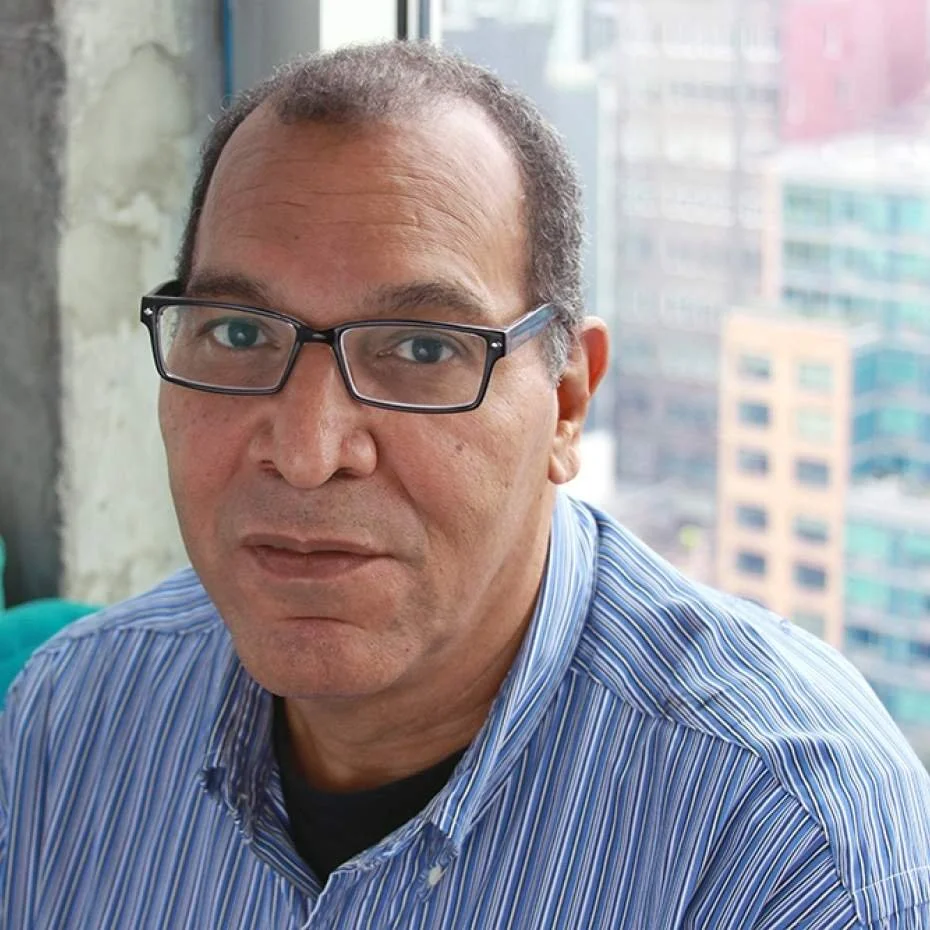
GRAND GRIOT: Ron Bechet, Dr. Beverly Wright, and Dr. Leona Tate
ANCESTRAL SALUTE
Watotos of Kumbuka
BEGIN PROCESSION
BLESSING
Father Emmanuel
FIRST STOP-Tomb of the Unknown Slave w/ Malik Bartholomew
SECOND STOP-Domestic Slave Trade Marker
THIRD STOP-Rolling Stop honoring Cabildo Triangle
PROCESSION TO RIVER
Watotos of Kumbuka
ANCESTOR CALL + POEM
Sunni Patterson
MANY RAINS AGO TO THE RIVER
Kai Knight
PLAGUE DOCTOR
Cherice Harrison-Nelson
DOVE RELEASE
Cherice Harrison-Nelson
RIVER OFFERINGS & FINAL ANCESTOR DANCE

MAAFA 2026 GRAND GRIOTS
-
![]()
Dr. Leona Tate
On November 14, 1960, six years after separate black and white schools were ruled unconstitutional in the Brown vs. Board of Education ruling, Leona Tate became one of four 6-year-old girls in New Orleans to integrate white-only public elementary schools in the Deep South. On that day, she, Gail Etienne, and Tessie Prevost enrolled in McDonogh No. 19 School in the Historic Ninth Ward. A fourth girl began classes minutes later at William Frantz School.
The Integration of New Orleans public elementary schools marked a major focal point in the history of the American Civil Rights Movement. With worldwide attention focused on New Orleans, federal marshals wearing yellow armbands escorted The New Orleans Four to the schools at 9 am. By 9:25 am, the two former all-white public elementary schools in the Deep South were desegregated.
In 2009, Leona Tate established the Leona Tate Foundation for Change, Inc. (LTFC) to purchase McDonogh 19, the school she, Tessie Prevost, and Gail Etienne integrated. As the volunteer Executive Director from 2009-2021, Dr. Tate led the organization to provide free summer camps, after-school tutoring, adult literacy, Christmas toy drives, and a monthly food pantry. Under her leadership, LTFC also staffed the Lower Ninth Ward Living Museum, a free community museum dedicated to the history of the Lower Ninth Ward neighborhood.
In 2020, LTFC with development partners, Alembic Community Developers, bought and renovated the historic McDonogh 19 campus, which reopened as the Tate, Etienne, and Prevost (TEP) Center in 2022. It is a mixed-use development dedicated to the history of New OrleansPublic School Desegregation, Civil Rights, and Black Life. Dr. Tate's mission for the TEP Center is to create a safe space and community anchor where the public can learn, support, and train for anti-racism activism and social restorative justice.
Tate has been bestowed with an Honorary Doctor of Humane Letters from St. Thomas Christian University, Macalester College, and Tulane University in recognition of her service to the New Orleans community and beyond.
Although operating the TEP Center demands much of her time and attention, Leona values quality time with her family. She is a mother of 3, a grandmother of 12, and a great-grandmother of 11. Leona's love for community anchors the mission of the Leona Tate Foundation for Change, Inc. and the TEP Center.
-
![]()
Ron Bechet
Ron Bechet, Born In New Orleans is a visual artist whose practice and critical engagement in the arts spans over 40 years. Best known for his large-scale black and white drawings and large colorful paintings, Bechet’s improvisational approach and mark-making aesthetic are grounded in experiences and cultural practices of the African diaspora and New Orleans’ unique traditions.
His work has been exhibited in museums and galleries nationally and internationally and held in many public and private collections, including the Ogden Museum of Southern Art, the New Orleans Museum of Art, the Pennsylvania College of Art and Design Museum and the University Manitoba Museum among a few. He has received numerous awards and honors for his work and was recently celebrated as Prospect 6 Gala Honoree and featured in BOMB as part of their Oral History Project in 2024.
Working within, beneath, and alongside the underlying layers of his experiences and the consequences of systemic confrontation, Bechet challenges assumptions of what art can be while pushing the boundaries of his creative approach.
Bechet earned a B.A. Degree from the University of New Orleans, Louisiana and an M.F.A. degree from Yale School of Art, Yale University. New Haven, Connecticut. In addition to his studio practice he is the Victor H. Labat Professor of Art at Xavier University of Louisiana where he has taught for over 20 Years.
-
![]()
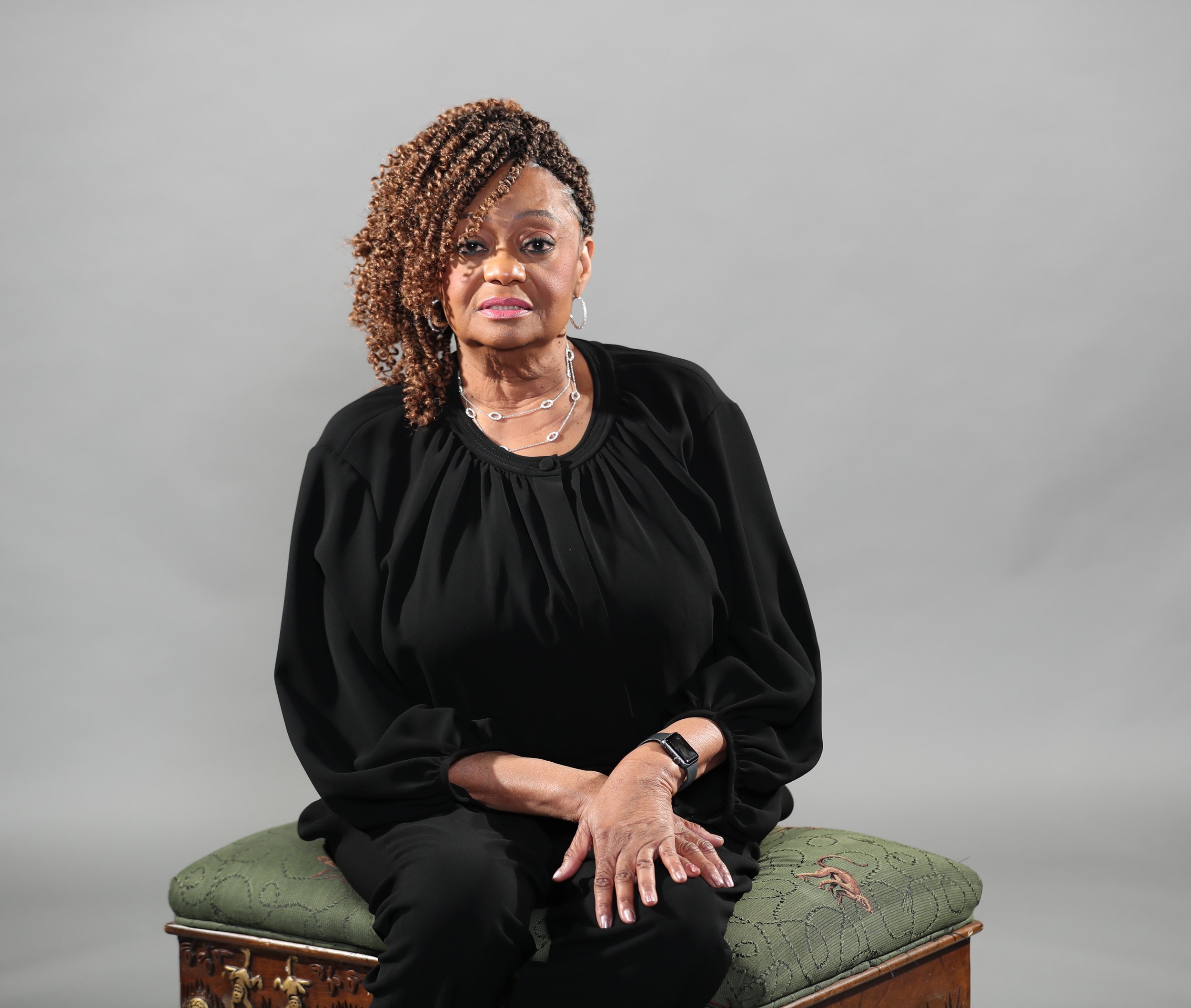
Gail Etienne
Civil Rights Icon | Member of The New Orleans Four With worldwide attention focused on New Orleans on November 14, 1960, six-year-old Gail Etienne walked into history.
On that extraordinary morning, Gail Etienne joined fellow members of The New Orleans Four, Leona Tate, Tessie Prevost, and Ruby Bridges—in one of the defining moments of the American Civil Rights Movement. Under the protection of United States Marshals, Gail Etienne, Leona Tate, and Tessie Prevost courageously desegregated McDonogh No. 19 Elementary School, while Ruby Bridges desegregated William Frantz Elementary School. Their quiet courage in the face of hatred helped dismantle the walls of legalized school segregation in New Orleans and throughout the Deep South, advancing the promise of equal educational opportunity for generations of American children.
What began as an extraordinary act of childhood courage became a lifelong commitment to preserving truth.
Today, Ms. Etienne serves as President and CEO of New Orleans Four LLC, leading the effort to protect, preserve, and restore the complete historical record and enduring legacy of The New Orleans Four. Through education, literature, film, and public history, she continues to ensure that future generations understand not only what happened on that historic day, but why it forever changed America.
More than six decades later, Gail Etienne remains a living civil rights icon, a guardian of history whose courage, resilience, and unwavering commitment to justice continue to inspire our nation and the world.

DOOR OF RETURN
PILGRIMAGE 2027
RETURNING HOME THROUGH SANKOFA.
Honoring the Past. Reclaiming the Present. Shaping the Future.

PATHWAYS TO FREEDOM
The Underground Railroad
Pilgrimage 2027
MAAFA 2026 ROUTE
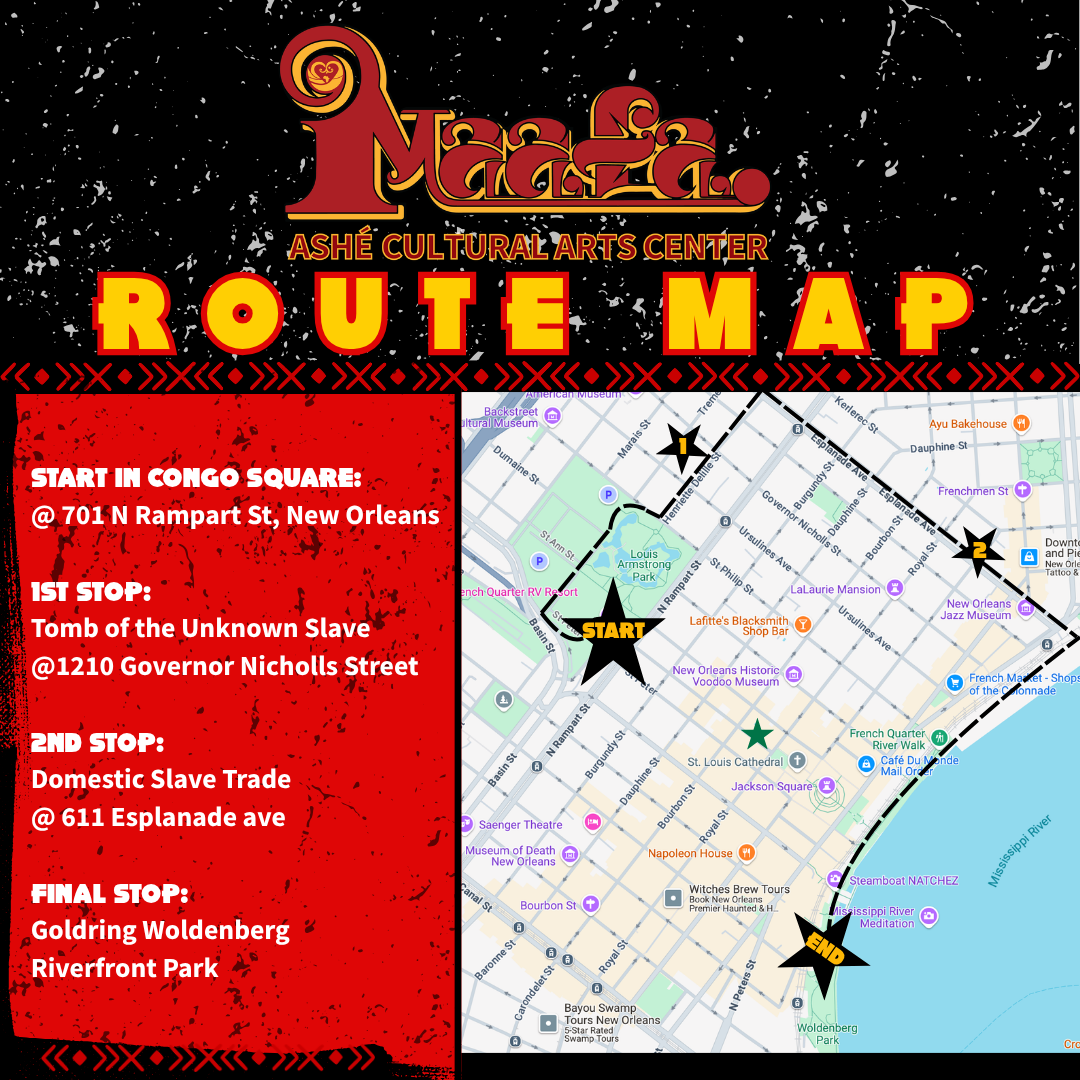
Below, Ashé Cultural Arts Center has created a digital map to guide you to historic sites of slavery in New Orleans. We invite everyone in attendance to learn more about the history of enslavement by visiting these sacred spaces.
Each Sankofa represents a different historical marker tied to enslavement in New Orleans. You can click on each icon to read about the history of each location. We encourage you to pause as you remember and bear witness.
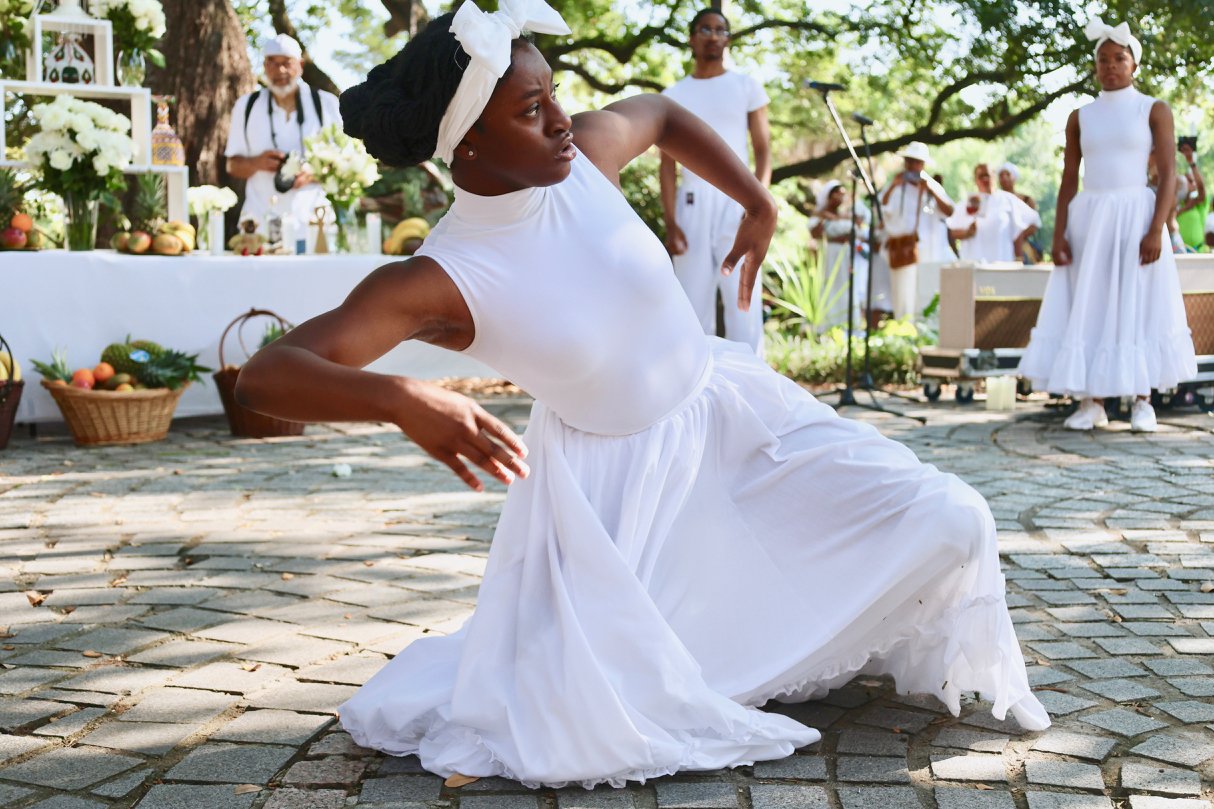
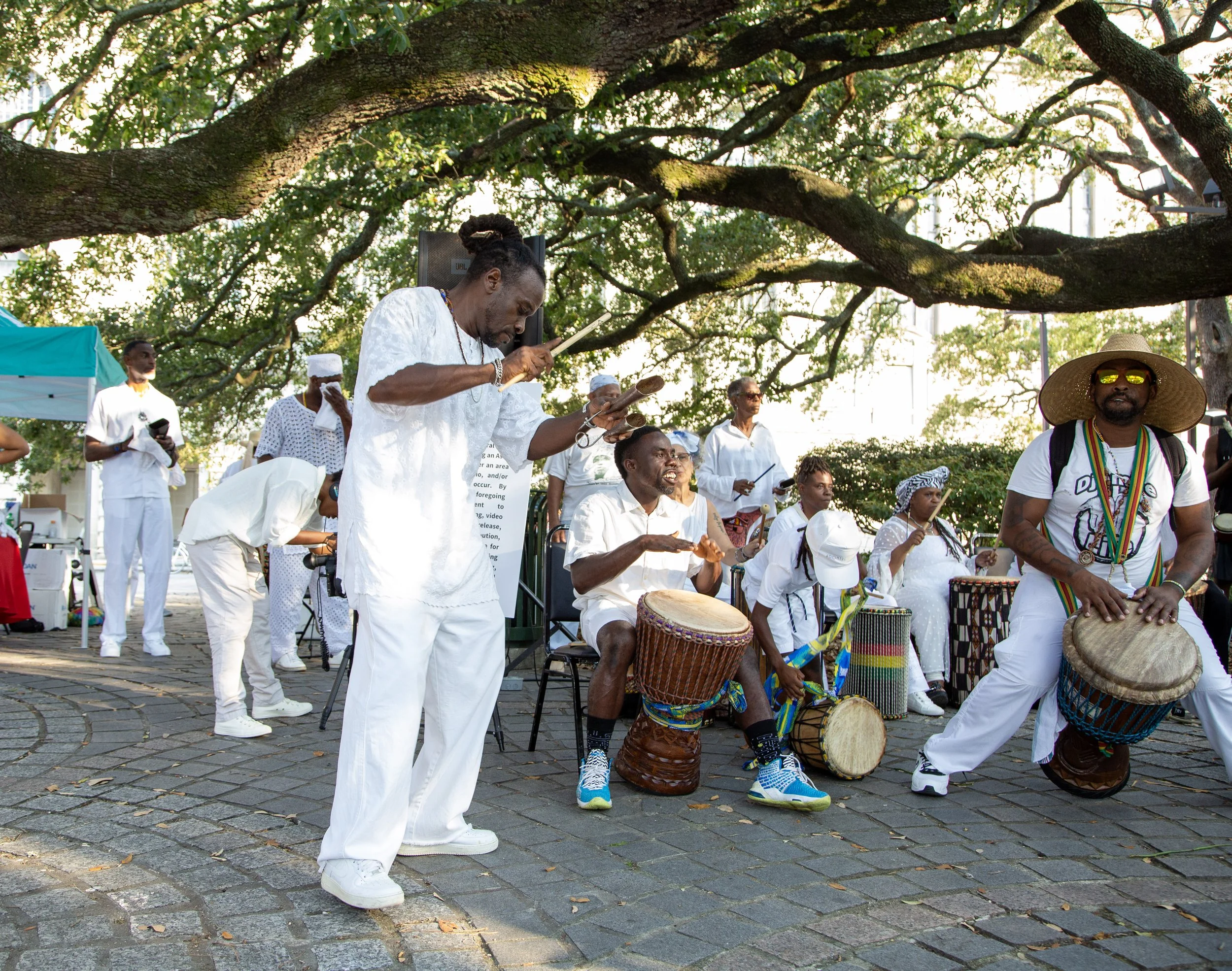


MAAFA is a racial healing commemoration of the ancestors, known and unknown, from the Transatlantic & Domestic Slave Trades.
Photo: Shannon Atkins
MAAFA is a Kiswahili word that means “great tragedy” or “horrific tragedy”, referring to the period called the Middle Passage or TransAtlantic Slave Trade. During that time, millions of captives from the continent of Africa were taken captive, persecuted, beaten, separated from their families and forced into enslavement and free labor.
The MAAFA commemoration offers an opportunity for the entire community to pause and reflect on that horrific transgression against humanity, and how to personally, as a community, agree to distance ourselves institutionally in word and deed from its legacy and the evolved practice of racism in our civic, social, spiritual and personal lives.
THE PROCESSION
Drummers, dancers, healers, artists, activists and musicians lead a procession from the sacred space of Congo Square, through historic Tremé, with a brief stop at St. Augustine Catholic Church, the site of the Tomb of the Unknown Slave. From there, the procession continues through the French Quarter with pauses at historical sites, including those where slave auctions regularly took place.
The procession ends at the Mississippi River with drumming, dancing, singing, and praying. Ancestors are honored by name, those affected by the TransAtlantic Slave Trade, individuals who were victims of tragic events and senseless acts of vilence, as well as all those who were, so that we might be.

THE HISTORY
In the year 2000, Ashé Cultural Art Center’s founders Carol Bebelle and Douglas Redd, engaged by Leia Lewis who coordinated the first MAAFA celebration, joined with other similar celebrations around the country. The vision for the MAAFA Commemoration was influenced by the work of St. Paul Community Baptist Church in Brooklyn, which was then led by New Orleans-born Rev. Johnie Ray Youngblood. There, an annual month-long series of activities from the MAAFA Remembrance. The word MAAFA is the concept of Dr. Marimba Ani, African-American scholar and author, and has been adopted in contemporary scholarship. Watch the video below to learn more.
MAAFA PHOTO GALLERIES

MAAFA 2021

MAAFA CONCERT 2019
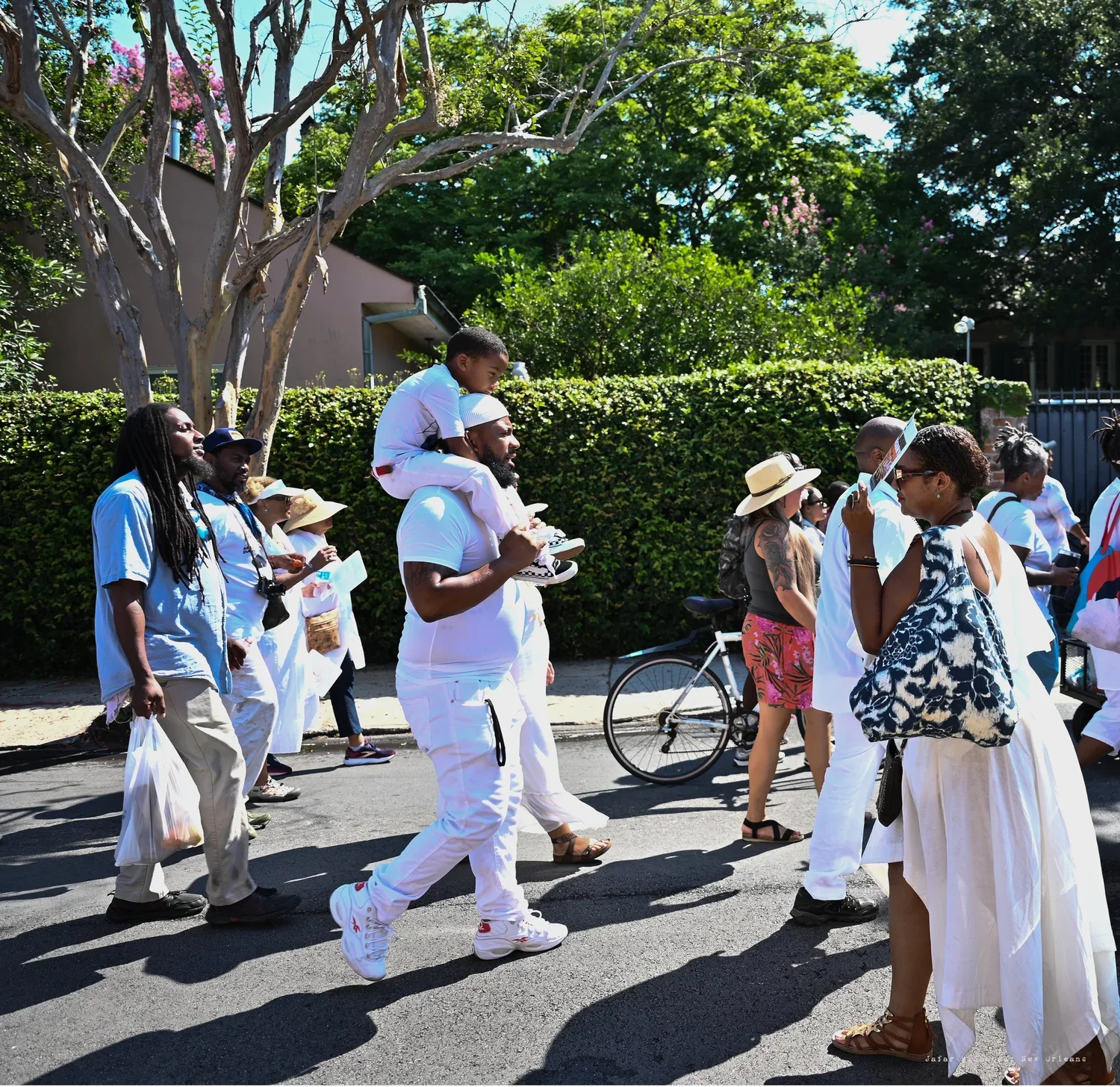
MAAFA 2025
